
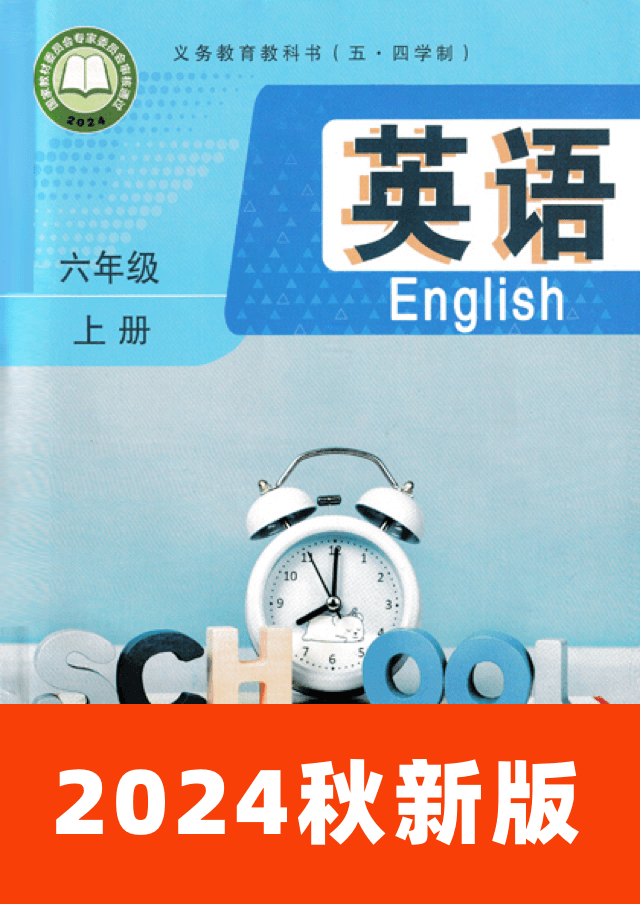
 切换教材
鲁教版五四制六年级上册英语 BRIDGING UNIT 1 课文句子跟读音频
BRIDGING UNIT 1 Hello!
衔接单元 1 你好!
SECTION A How do you greet people?
A 部分 你如何问候别人?
1a. Look at the picture.
1a. 看这张照片。
Match the names with the faces.
把名字和面孔匹配起来。
Hello, Helen!
你好,海伦!
Hi, Yaming!
嗨,亚明!
Good morning, Ella and Emma!
早上好,埃拉和埃玛!
Good morning, Teng Fei!
早上好,滕飞!
Hi, Peter!
嗨,彼得!
Hello, Fu Xing!
你好,付星!
1b. Greet your classmates.
1b. 问候你的同学。
Hello, ...
你好,⋯⋯
Hi,...
嗨,⋯⋯
Good morning, ...
早上好,⋯⋯
Good morning, ...
早上好,⋯⋯
2a. Listen and say the letters.
2a. 听并说出这些字母。
Then practise writing them.
然后练习写作。
Aa Bb Cc Dd Ee Ff Gg
Hh Ii Jj Kk Ll Mm Nn
Oo Pp Qq Rr Ss Tt
Uu Vv Ww Xx Yy Zz
2b.
2b.
Listen and circle the letters you hear in 2a.
听录音,圈出你在 2a 中听到的字母。
b, c, g, h, j, I,
b、c、g、h、j、I、
n, q, r, v, x, z
n、q、r、v、x、z
2c. Listen to three conversations.
2c. 听三段对话。
Fill in the blanks with the correct sentences in the box.
用方框中正确的句子填空。
Conversation 1
对话 1
Ms Gao: Good morning, class.
高老师:同学们,早上好。
Class: Good morning, Ms Gao.
同学们:早上好,高老师。
Ms Gao: Sit down, please.
高老师:请坐。
Conversation 2
对话 2
Ms Gao: Hello, Peter.
高老师:你好,彼得。
Can you say hi to the class?
你能向全班同学打个招呼吗?
Peter: Hi, everyone!
彼得:大家好!
I'm Peter Brown.
我是彼得·布朗。
Ms Gao: Thank you, Peter.
高老师:谢谢你,彼得。
Conversation 3
对话 3
Emma: Good morning.
埃玛:早上好。
My name is Emma.
我叫埃玛。
Fu Xing: Good morning, Emma.
付星:早上好,埃玛。
Emma: So what's your name?
埃玛:那你叫什么名字?
Fu Xing: Oh, I'm Fu Xing.
付星:哦,我是付星。
Nice to meet you, Emma.
很高兴见到你,埃玛。
Emma: Nice to meet you too, Fu Xing!
埃玛:我也很高兴见到你,付星!
2d. Make up a conversation to greet each other.
2d. 编一段对话互相问候。
Pronunciation
发音
1. Listen to the 26 letters.
1. 听 26 个字母。
Find them on the keyboard.
在键盘上找到它们。
Then practise with a partner.
然后和搭档一起练习。
A a B b C c D d
E e F f G g
H h I i J j K k
L l M m N n
O o P p Q q
R r S s T t
U u V v W w
X x Y y Z z
2. Listen and repeat the letters.
2. 听录音并跟读这些字母。
1. /eɪ/
Aa Hh Jj Kk
2. /i:/
Bb Cc Dd Ee Gg Pp Tt Vv Zz
3. /e/
Ff LI Mm Nn Ss Xx Zz
4. /aɪ/
Ii Yy
5. /əʊ/
Oo
6. /ju:/
Qq Uu Ww
7. /ɑ:/
Rr
3. Listen to these letters.
3. 听这些字母。
Match them with the pictures.
将它们与图片进行匹配。
1. PRC
1. 中华人民共和国
2. PLA
2. 中国人民解放军
3. VR
3. 虚拟现实
4. WHO
4. 世界卫生组织
5. UN
5. 联合国
4. Listen and sing the song.
4. 听并唱这首歌。
A, B, C, D, E, F, G,
A、B、C、D、E、F、G、
H, I, J, K, L, M, N,
H、I、J、K、L、M、N、
O, P, Q, R, S, T,
O、P、Q、R、S、T、
U, V, W, X, Y, Z.
U、V、W、X、Y、Z。
X, Y, Z — now you see,
X、Y、Z——现在你看,
I can say my ABCs.
我可以说出我的 ABCs。
A, B, C, D, E, F, G,
A、B、C、D、E、F、G、
H, I, J, K, L, M, N,
H、I、J、K、L、M、N、
O, P, Q, R, S, T,
O、P、Q、R、S、T、
U, V, W, X, Y, Z.
U、V、W、X、Y、Z。
X, Y, Z — now you see,
X、Y、Z——现在你看,
I can say my ABCs.
我可以说出我的 ABCs。
SECTION B How do you start a conversation?
B 部分 你如何开始对话?
1a. Tick the expressions that start a conversation.
1a. 勾选开始一段对话的表达。
Hello!
你好!
How are you?
你好吗?
What's your name?
你叫什么名字?
Good morning.
早上好。
Nice to meet you.
很高兴认识你。
Goodbye.
再见。
1b. Read the two conversations.
1b. 阅读这两段对话。
Find out how people start their conversations.
了解人们如何开始他们的对话。
Conversation 1
对话 1
Good morning.
早上好。
I'm Teng Fei.
我叫滕飞。
What's your name?
你叫什么名字?
Good morning.
早上好。
My name is Emma Miller.
我叫埃玛·米勒。
How do you spell your name?
你的名字怎么拼写?
E-M-M-A, Emma.
E-M-M-A,埃玛。
M-I-L-L-E-R, Miller.
M-I-L-L-E-R,米勒。
You can call me Emma.
你可以叫我埃玛。
Nice to meet you, Emma.
很高兴见到你,埃玛。
Nice to meet you too, Teng Fei.
我也很高兴见到你,滕飞。
Conversation 2
对话 2
Hello, Wang Yaming!
你好,王亚明!
How are you?
你好吗?
Hi, Helen.
嗨,海伦。
I'm fine, thank you.
我很好,谢谢。
And you?
你呢?
I'm great, thanks.
我很好,谢谢。
Oh, that's the bell.
哦,铃声响了。
Let's go to class.
我们去上课吧。
Goodbye!
再见!
Bye!
再见!
2a. Read the conversations in 1b again.
2a. 再次阅读 1b 中的对话。
Fill in the blanks with the correct responses in the box.
用方框中的正确答案填空。
My name is Emma Miller.
我叫埃玛·米勒。
E-M-M-A, Emma.
E-M-M-A,埃玛。
M-I-L-L-E-R, Miller.
M-I-L-L-E-R,米勒。
I'm fine, thank you.
我很好,谢谢你。
Nice to meet you too.
我也很高兴见到你。
How are you?
你好吗?
What's your name?
你叫什么名字?
Nice to meet you.
很高兴见到你。
How do you spell your name?
你的名字怎么拼写?
2b. Complete the conversations.
2b. 完成对话。
Then role-play them with a partner.
然后与搭档进行角色扮演。
Over to You
轮到你了
*Brainstorming
*头脑风暴
Give a name
起名字
1a List the names in alphabetical order.
1a. 按字母顺序列出这些名字。
1b. List the girls'names and the boys'names from 1a.
1b. 列出 1a 中的女孩和男孩。
Girls'names
女孩的名字
Boys'names
男孩的名字
2a. Read the messages and match them with pictures.
2a. 阅读信息并将其与图片相匹配。
Circle the first names and underline the last names.
圈出名字并在姓氏下面划线。
My name is Helen Smith.
我的名字叫海伦·史密斯。
My phone number is 281-9176.
我的电话号码是 281-9176。
My friend is Mary Miller.
我的朋友是玛丽·米勒。
Her phone number is 232-4672.
她的电话号码是 232-4672。
I'm Wang Ming.
我是王明。
Zhang Peng is my friend.
张鹏是我的朋友。
His phone number is 257-8900, and my number is 929-3155.
他的电话号码是 257-8900,我的号码是 929-3155。
I'm Jack White, and my friend is Tom Green.
我是杰克·怀特,我的朋友是汤姆·格林。
My phone number is 357-5689.
我的电话号码是 357-5689。
His phone number is 232-6344.
他的电话号码是 232-6344。
2b. Read the list of names.
2b. 阅读名单。
Write F for first name and L for last name.
名字写 F,姓氏写 L。
2c. Match the names with the phone numbers.
2c. 将姓名与电话号码匹配。
Then find three pairs of friends in the name list.
然后在名单上找到三对朋友。
*Project
*专项
Learn how to use a dictionary
学习如何使用词典
1. Read the dictionary pages.
1. 阅读字典。
Pay attention to the words in blue.
注意蓝色的单词。
What order are they in?
它们按什么顺序排列?
A
asleep
睡着的
sleeping
睡觉
The baby is asleep so we have to be quiet.
婴儿睡着了,所以我们必须安静。
astronaut
宇航员
a person who works in space
在太空工作的人
at
向;朝;在(某处、某时间或时刻)
He gets up at 7 o'clock.
他七点钟起床。
Let's meet at the school gate.
让我们在学校门口见面。
aunt
姑(姨、伯、婶、舅)母
your mother's or father's sister
你的母亲或父亲的姐妹
autumn
秋天
the time of the year
一年中的时间
between summer and winter
夏天和冬天之间
awake
唤醒
not asleep
没睡着
away
离开
to another place
去另一个地方
The mouse ran away when it saw the cat.
老鼠一看到猫就跑了。
awful
可怕的
bad, terrible
糟糕的,可怕
The pain was awful.
疼痛难忍。
axe
斧头
You use an axe to cut wood or trees.
你用斧头砍木头或树。
B
baby
婴儿
a very young child (babies)
非常年幼的小孩(婴儿)
back
后面;背部 回来;回原处
1. the part behind
1. 后面的部分
The tall boys will stand at the back.
高个子男孩将站在后面。
2. to where it was before
2. 回到以前的地方
Give me the book back.
把书还给我。
bad
坏的
not good
不好的
A rainy day is a bad day for a picnic.
雨天不适合野餐。
bag
袋子
A bag is used to carry things.
袋子是用来装东西的。
ball
球
something round to play with
可以玩的圆形东西
balloon
气球
a toy made of rubber that you blow up
你可以吹起来的一种用橡胶制成的玩具
banana
香蕉
a long yellow fruit
一种长长的黄色水果
bank
河堤;银行
1. a side of a river
1. 河的一侧
2. a place to keep money in safely
2. 一个安全存放钱的地方
2. Number the following words in alphabetical order.
2. 按字母顺序给下列单词编号。
you
你;您;你们
English
英语;英格兰人 英语的;英格兰的
speak
说
after
在⋯⋯之后
bike
自行车
cold
寒冷的
hello
你好;喂
morning
早晨;上午
please
(用于客气地请求或吩咐)请
come
来;来到
what
什么
goodbye
再见;再会
spell
用字母拼;拼写
afternoon
下午
evening
晚上
3. Have a competition.
3. 来一场比赛。
Find these words in a dictionary as fast as you can.
尽快在字典里找到这些单词。
short
短的;矮的
animal
动物
tomato
西红柿
beautiful
美丽的
brown
棕色(的);褐色(的)
lake
湖
glass
玻璃
house
房子
picture
照片;图画
shoe
鞋
鲁教版五四制六年级上册英语BRIDGING UNIT 1单词跟读音频
单词跟读unit
section
greet
oh
everyone
start
conversation
spell
bell
Helen
across
gym
raise
whiteboard
important
modern
centre
screen
amazing
field
large
change
corner
delicious
notice
sound
seat
hall
special
office
鲁教版五四制六年级上册BRIDGING UNIT 1英语最新练习题
 黑龙江绥化市望奎县三中联考2026-2027学年六年级上学期开学阶段学情自测英语试题含答案
2026-09-14
-
黑龙江绥化市望奎县五中联考2026-2027学年六年级上学期开学阶段学情自测英语试题含答案
2026-09-14
-
黑龙江绥化市望奎县四中联考2026-2027学年六年级上学期开学阶段学情自测英语试题含答案
2026-09-14
 Unit 5 Fun Clubs Section B一课一练英语鲁教版(五四学制)(2024)初中六年级上册(无答案)
2026-05-26
-
Unit 5 Fun Clubs Section A一课一练英语鲁教版(五四学制)(2024)初中六年级上册(无答案)
2026-05-26
-
Unit 2 We're Family! Section B一课一练英语鲁教版(五四学制)(2024)初中六年级上册(无答案)
2026-05-25
-
Unit 2 We're Family! Section A一课一练英语鲁教版(五四学制)(2024)初中六年级上册(无答案)
2026-05-25
-
Unit 2 We're Family! Over to you一课一练英语鲁教版(五四学制)(2024)初中六年级上册(无答案)
2026-05-25
-
Unit 3 My School Section A一课一练英语鲁教版(五四学制)(2024)初中六年级上册(无答案)
2026-05-25
-
Unit 3 My School Over to you一课一练英语鲁教版(五四学制)(2024)初中六年级上册(无答案)
2026-05-25
-
Unit 4 My Favourite Subject Section B一课一练英语鲁教版(五四学制)(2024)初中六年级上册(无答案)
2026-05-25
-
Unit 4 My Favourite Subject Section A一课一练英语鲁教版(五四学制)(2024)初中六年级上册(无答案)
2026-05-25
-
Unit 4 My Favourite Subject Over to you一课一练英语鲁教版(五四学制)(2024)初中六年级上册(无答案)
2026-05-25
-
Unit 3 My School Section B一课一练英语鲁教版(五四学制)(2024)初中六年级上册(无答案)
2026-05-25
-
Unit 5 Fun Clubs Over to you一课一练英语鲁教版(五四学制)(2024)初中六年级上册(无答案)
2026-05-25
-
Unit 1 You and Me Section B一课一练英语鲁教版(五四学制)(2024)初中六年级上册(无答案)
2026-05-24
-
Unit 1 You and Me Section A一课一练英语鲁教版(五四学制)(2024)初中六年级上册(无答案)
2026-05-24
-
Unit 1 You and Me Over to you一课一练英语鲁教版(五四学制)(2024)初中六年级上册(无答案)
2026-05-24
-
Unit 4 My Favourite Subject Section B一课一练英语鲁教版(五四学制)(2024)初中六年级上册(无答案)
2026-05-13
-
Unit 4 My Favourite Subject Section A一课一练英语鲁教版(五四学制)(2024)初中六年级上册(无答案)
2026-05-13

 已安全检测