
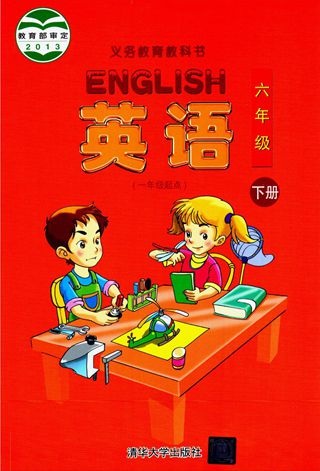
 切换教材
切换教材
UNIT 3 GREAT PEOPLE课文句子跟读音频
All great people are similar in some ways.
所有的伟人在某些方面都很相似。
Do you know what makes them similar?
你知道是什么让他们相似的吗?
Read about the great people and their stories to find the answers.
阅读伟人们的信息和故事,以找出答案。
UNIT 3 GREAT PEOPLE
第三单元 伟人
UNIT 3
第三单元
LESSON 15
第十五课
Listen to the text.
听短文。
Then finish the sentences.
然后完成句子。
Newton
牛顿
Isaac Newton was a great physicist.
艾萨克·牛顿是一位伟大的物理学家。
He was born in 1642 in England.
他于1642年出生在英国。
He died in 1727.
他于1727年逝世。
One day, Newton was sitting under an apple tree.
有一天,牛顿正坐在一棵苹果树下。
He saw an apple falling from the tree.
他看到有个苹果从树上掉下来。
Why do apples fall down to the ground?
“为什么苹果会落到地上?
Why does the moon stay up in the sky and does not fall down?"
为什么月亮可以一直挂在天上不掉下来呢?”
Newton worked on the problem and found out the law of universal gravitation.
牛顿钻研着这个问题,于是发现了万有引力定律。
Apples fall down to the Earth from apple trees.
苹果会从苹果树上落到地上。
The moon stays up in the sky and does not fall down.
月亮可以一直挂在天上不掉下来。
Newton was a great physicist.
牛顿是一位伟大的物理学家。
Listen to the story.
听故事。
Then answer the questions.
然后回答问题。
One day, Newton invited his best friend to his house for lunch.
有一天,牛顿邀请了他最好的朋友来家里吃午饭。
The friend came to Newton's house.
这位朋友来到牛顿的家里。
Lunch was ready, but Newton was still working in his lab.
午饭准备好了,但是牛顿还在他的实验室里工作。
The friend waited for one hour, but Newton did not come to eat.
这位朋友等了一个小时,但牛顿还是没有过来吃饭。
The friend ate the food alone and left.
这位朋友独自一人吃完饭,然后就离开了。
Late in the afternoon, Newton felt hungry.
在下午晚些时候,牛顿感觉饿了。
He came to eat lunch.
他过来吃午饭。
When he saw the empty dishes and bowls, he smiled.
当他看到空盘子和空碗时,他笑了。
"Oh, what a fool I am," he said to himself.
“哦,我真是个傻瓜,”他自言自语说。
"I have finished my lunch."
“我已经吃完午饭了。”
What did Newton invite his friend to do?
牛顿邀请他的朋友来做什么?
Why did Newton's friend eat lunch alone?
牛顿的朋友为什么会独自一人吃午饭?
What do you think Newton would do after he said, "Oh, what a fool I am!
你认为牛顿在说完,“哦,我真是个傻瓜!之后,将会做什么?
I have finished my lunch."?
我已经吃完午饭了。”
Ask questions with the words in the ( ).
用括号里的单词来提问。
The first one is done for you.
第一个已经为你做好了。
Newton was born in England. (where, was)
牛顿出生在英国。(在哪里,be的过去式)
Where was Newton born?
牛顿出生在哪里?
The friend came to Newton's house for lunch. (who)
这位朋友来到牛顿的家里吃午饭。(谁)
The friend left at two o'clock. (when, did, leave)
这位朋友在两点钟离开了。(什么时候,do的过去式,离开)
Newton saw some empty bowls and plates. (what, did, see)
牛顿看到一些空碗和空盘子。(什么,do的过去式,看到)
Learn the proverb.
学谚语。
Then translate it into Chinese.
然后将它翻译成中文。
The apple doesn't fall far from the tree.
苹果落地,离树不远。
UNIT 3
第三单元
LESSON 16
第十六课
Listen to the text.
听课文。
Then answer the questions.
然后回答问题。
Edison
爱迪生
Thomas Edison was a great inventor.
托马斯·爱迪生是一位伟大的发明家。
He was born in 1847 in the US.
他于1847年出生在美国。
He died in 1931.
他于1931年逝世。
Edison worked very hard.
爱迪生工作非常努力。
He spent most of his time in his lab and machine shop.
他把大部分时间都花在了自己的实验室和机械工厂里。
Sometimes he worked 20 hours a day.
有时候他一天工作20个小时。
He invented many things in his lifetime.
他一生中发明了许多东西。
His most famous invention was the light bulb.
他最著名的发明就是灯泡。
Edison was not lucky when he was a child.
当爱迪生还是个孩子的时候,他并不幸运。
When he was seven, he fell ill and became almost deaf.
当他七岁的时候,他生病了,还差点变成了聋子。
At school, he could not hear the teachers.
在学校里,他听不见老师们说的话。
The teachers did not know this.
老师们并不知道这一点。
They thought Edison was not a good student and made him leave school.
他们以为爱迪生不是个好学生,于是就让他退学。
Edison became very interested in learning.
爱迪生对学习变得非常感兴趣。
This was an important reason for his success in later life.
这是他在晚年生活中取得成功的重要原因。
Luckily, Edison's mother was a teacher.
幸好爱迪生的母亲是一位老师。
She taught Edison at home.
她在家里教爱迪生。
She showed him how to learn things by himself.
她教他如何靠自己学东西。
What was Edison's most famous invention?
爱迪生最著名的发明是什么?
What happened to Edison when he was seven years old?
爱迪生在七岁的时候发生了什么事?
Why did the teachers make Edison leave school?
为什么老师们让爱迪生退学?
Which sentence in the text tells us the important reason for Edison's success in later life?
课文中的哪一个句子告诉了我们爱迪生在晚年生活中取得成功的重要原因?
Listen, read and write.
听一听,读一读并写一写。
invent
发明,创造
invention
发明,发明物
inventor
发明家
success
成功
lifetime
一生
interested
感兴趣的
Below are questions with wh-words.
下面是以wh-开头的疑问词所构成的特殊疑问句。
Use the words in the ( ) to answer the questions.
使用括号里的单词来回答这些问句。
Then work in pairs.
然后两人一组进行练习。
Where was Edison born? (was, in the US)
爱迪生出生在哪里?(be的过去式,在美国)
What did Edison invent? (invented, the light bulb)
爱迪生发明了什么?(发明,灯泡)
Who taught Edison at home? (Edison's mother)
是谁在家里教爱迪生?(爱迪生的母亲)
When did Edison die? (died, when he was 84 years old)
爱迪生是什么时候死的?(死亡,当他84岁的时候)
UNIT 3
第三单元
LESSON 17
第十七课
Listen to the text.
听短文。
Then finish the sentences.
然后完成句子。
Einstein
爱因斯坦
Albert Einstein was a great physicist.
阿尔伯特·爱因斯坦是一位伟大的物理学家。
He was born in 1879 in Germany.
他于1879年出生在德国。
He moved to the US in 1933.
他于1933年搬到了美国。
He died in 1955.
他于1955年逝世。
Einstein was very famous in the field of physics.
爱因斯坦在物理学领域非常出名。
He won the Nobel Prize for physics in 1921.
他于1921年获得了诺贝尔物理学奖。
Einstein had many good ideas.
爱因斯坦拥有许多好想法。
He spent a lot of time thinking about them.
他花了许多时间来思考它们。
He wrote many papers.
他写了许多论文。
He gave talks in many different parts of the world.
他还在世界的许多不同地区发表过演讲。
Einstein was born in 1879 in Germany.
爱因斯坦于1879年出生在德国。
He moved to the US in 1933.
他于1933年搬到了美国。
Einstein gave talks in many different parts of the world.
爱因斯坦在世界的许多不同地区发表过演讲。
Einstein was a great physicist.
爱因斯坦是一位伟大的物理学家。
Listen to the story.
听故事。
Then write T or F after each sentence.
然后在每个句子后面写上T或F。
Einstein gave talks in many places.
爱因斯坦在许多地方发表过演讲。
His driver always sat in the back of the room and listened to his talks.
他的司机总是坐在房间后面听他的演讲。
One day, his driver said, "I have heard your talk so many times.
有一天,他的司机说,“我已经听过你那么多次的演讲。
I can give the talk for you today."
我可以替你发表今天的这次演讲。”
Einstein laughed.
爱因斯坦笑了。
He agreed to let his driver give the talk.
他同意让他的司机发表这次演讲。
The driver put on Einstein's clothes.
司机穿上了爱因斯坦的衣服。
He gave the talk and Einstein listened.
他发表了这次演讲,爱因斯坦也听了。
The driver gave a good talk.
司机演讲做得很棒。
He did not make any mistakes.
他没有犯任何错误。
After the talk, a listener asked him a question, but he could not answer it.
演讲完后,有位听众问了他一个问题,但是他答不上来。
He said, "This is an easy question.
他说,“这是个很简单的问题。
I'll ask my driver to answer it."
我要让我的司机来回答。”
Einstein asked his driver to give the talk for him.
爱因斯坦让他的司机替他发表这次演讲。
The driver did not know how to answer the question.
司机不知道该如何回答那个问题。
Finish the sentences with the words from the word box.
用单词框中的单词完成这些句子。
back
后面
easy
简单的;容易的
mistakes
错误
papers
论文
work
工作
field
领域
Tom is tall.
汤姆个子很高。
He sits in the back of the classroom.
他坐在教室的后面。
My teacher is famous in the field of science.
我的老师在科学领域很出名。
Einstein wrote many papers and gave many talks.
爱因斯坦写了许多论文,并且发表了许多演讲。
The question is easy.
这个问题很简单。
All the students can answer it.
所有学生都能回答它。
English is important.
英语很重要。
We all work hard at it.
我们都努力学习英语。
I did not make any mistakes in my math homework yesterday.
在昨天的数学作业中我没有犯任何错误。
Learn the proverb.
学谚语。
Then translate it into Chinese.
然后将它翻译成中文。
Clothes don't make the man.
好马不在鞍,人美不在衫。
UNIT 3
第三单元
LESSON 18
第十八课
Listen to the text.
听课文。
Then answer the questions.
然后回答问题。
Da Vinci
达·芬奇
Leonardo da Vinci was a great artist.
列奥纳多·达·芬奇是一位伟大的画家。
He was born in 1452 in Italy.
他于1452年出生在意大利。
He died in 1519.
他于1519年逝世。
Da Vinci began to learn to paint when he was 14 years old.
达·芬奇在十四岁的时候就开始学画画。
His most famous painting was the Mona Lisa.
他最著名的画就是《蒙娜·丽莎》。
People loved the painting.
人们喜欢这幅画。
They loved the smile on the face of Mona Lisa.
他们喜欢蒙娜·丽莎脸上的微笑。
They named the smile Mona Lisa's Smile.
他们将这微笑命名为“蒙娜·丽莎的微笑”。
When did da Vinci begin to learn to paint?
达·芬奇是什么时候开始学画画的?
What was the most famous painting by da Vinci?
由达·芬奇所画的最著名的画是什么?
What can you say about the famous painting the Mona Lisa?
你能对《蒙娜·丽莎》这幅名画说些什么?
Listen to the story.
听故事。
Then answer the questions.
然后回答问题。
There are different stories about the famous painting the Mona Lisa.
关于《蒙娜·丽莎》这幅名画,有着不同的故事。
Here is one of them.
这就是它们其中一个。
Da Vinci was famous for making cakes.
达·芬奇是因做蛋糕而出名的。
His chocolate cake was the best.
他的巧克力蛋糕是最棒的。
Da Vinci had a good friend named Mona Lisa.
达·芬奇有一个名叫蒙娜·丽莎的好朋友。
She loved chocolate cake very much.
她非常喜欢巧克力蛋糕。
One day, Mona Lisa came to visit da Vinci.
有一天,蒙娜·丽莎过来拜访达·芬奇。
Da Vinci was making a chocolate cake.
达·芬奇正在做一个巧克力蛋糕。
Da Vinci said, "Let me paint you.
达·芬奇说,“让我把你画下来吧。
When I finish the painting, we'll share the chocolate cake."
当我画完的时候,我们就一起分享这个巧克力蛋糕。
Mona Lisa was happy to hear this.
”蒙娜·丽莎听到这个很高兴。
She smiled, and da Vinci painted her with that smile.
她笑了,于是达·芬奇就画下了面带微笑的她。
Who was Mona Lisa?
蒙娜·丽莎是谁?
Why was there a smile on the painting the Mona Lisa?
为什么在《蒙娜·丽莎》这幅画上面会有微笑?
What would da Vinci do after he finished painting his friend?
达·芬奇画完他的朋友之后将会做什么?
Read and match.
读一读,连一连。
Mona Lisa smiled.
蒙娜·丽莎笑了。
Many people love the smile.
许多人都喜欢这个微笑。
The Mona Lisa is a famous painting.
《蒙娜·丽莎》是一幅名画。
Many people love the painting.
许多人都喜欢这幅画。
I have finished my homework.
我已经做完作业了。
Can I watch TV now?
我现在可以看电视吗?
Qi Baishi was a great artist.
齐白石是一位伟大的画家。
He was famous for painting flowers and insects.
他因画花和昆虫而出名。
There is a smile on the famous painting the Mona Lisa.
在《蒙娜·丽莎》这幅名画上面有一个微笑。
Da Vinci painted her with that smile.
达·芬奇画下了面带微笑的她。
UNIT 3
第三单元
LESSON 19
第十九课
Listen to the text.
听短文。
Then read it aloud.
然后将它大声地朗读出来。
Hua Luogeng
华罗庚
Hua Luogeng was a great Chinese mathematician.
华罗庚是中国一名伟大的数学家。
He was famous for his work in number theory.
他因其在数论方面的工作而闻名。
He was born in 1910 and died in 1985.
华罗庚生于1910年,于1985年与世长辞。
Hua Luogeng was very interested in math.
华罗庚对数学非常感兴趣。
He showed great talent in math when he was in primary school and middle school.
他在上小学和初中时就表现出很高的数学天赋。
With help from his teacher, he learned a lot of math by himself.
在老师的帮助下,他自学了许多数学知识。
Hua Luogeng was born in a poor family.
华罗庚出生贫寒。
After he finished middle school, he could not afford to go to high school.
读完初中后,他没有钱去读高中。
He stayed at home and helped his father at his shop.
他呆在家里,帮父亲打理店铺。
However, he continued to study math by himself and did research in math problems.
然而,他继续自学数学,做数学问题的研究。
People say hard work pays off.
人们总说努力就会有回报。
With his talent and hard work, Hua Luogeng became a world famous mathematician.
华罗庚凭借自身的天赋和后天的努力,成为了世界著名的数学家。
Write T or F after each sentence.
在每个句子后面写上T或F。
Hua Luogeng was a famous mathematician.
华罗庚是一名著名的数学家。
Hua Luogeng liked studying math by himself more than from his teachers.
比起老师教的,华罗庚更喜欢自学数学。
Hua Luogeng did research in number theory.
华罗庚从事数论方面的研究。
Listen to the dialogue.
听对话。
Then work in pairs.
然后两人一组进行练习。
Hello, David.
你好,大卫。
Hi, James.
嗨,詹姆斯。
I'm reading about a great Chinese mathematician.
我在读有关中国伟大数学家的书。
Who is it?
是谁?
His name is Hua Luogeng.
他叫华罗庚。
Oh, Hua Luogeng!
噢,华罗庚!
Do you mean the Chinese mathematician who was famous for his work in number theory?
你是说那个从事数论研究的著名中国数学家吗?
Yes!
是的!
They say he had a great interest and talent in math.
人们说他对数学有极大的兴趣,天赋异禀。
He learned math mostly by himself.
数学主要是靠自学。
Can you believe that?
你相信吗?
He learned math by reading math books himself and became a world famous mathematician!
他自己看书学数学,成为世界著名的数学家!
Unbelievable!
难以置信!
Can I read the book, too?
我能看看那本书吗?
Sure.
当然可以。
I'll lend it to you once I finish it.
我一看完就把书借给你。
That'll be great!
那就太好了!
Learn the saying.
学习谚语。
Then translate it into Chinese.
然后将其翻译成中文。
Mathematics gives us hope that every problem has a solution.
数学给予我们希望,让每个问题得以解决。
UNIT 3
第三单元
LESSON 20
第二十课
Listen to the text.
听短文。
Then read it aloud.
然后将它大声地朗读出来。
Helen Keller
海伦·凯勒
Helen Keller was born in 1880 in the US, and died in 1968.
海伦·凯勒于1880年出生在美国,于1968年逝世。
When she was one and a half years old, she fell ill.
当她一岁半的时候,她生病了。
She became deaf and blind.
于是她就变得又聋又瞎。
She could not speak.
她还不能说话。
When Helen was seven, Anne Sullivan became her teacher.
当海伦七岁的时候,安妮·苏利文成了她的老师。
Anne taught her to spell words, but she could not understand them.
安妮教她拼写单词,但是她并不理解它们的意思。
One day, Anne put Helen's left hand under the running water, and spelled "W-A-T-E-R" into her right hand.
有一天,安妮把海伦的左手放在自来水下方,然后在她的右手中拼写了“W-A-T-E-R”这个单词。
This worked like magic.
这就像魔法一样奏效。
Helen understood.
海伦理解了那个单词的意思。
The thing which was running down her hand was "water".
沿着她的手往下流的东西就是“水”。
From then on, Helen learned to read and write.
从那时起,海伦就学会了读和写。
She learned to speak a little when she was ten years old.
当她十岁的时候,她学会了说一点话。
She wrote more than ten books.
她写了十多本书。
The Story of My Life was one of them.
《我的人生故事》就是它们其中一本。
Later in her life, Helen traveled all over the world to give talks.
在她的晚年生活中,海伦到世界各地旅游,发表演讲。
She also collected money and helped blind and deaf people.
她还筹钱帮助盲人和聋哑人。
The Story of My Life by Helen Keller
由海伦·凯勒所写的《我的人生故事》
Write T or F after each sentence.
在每个句子后面写上T或F。
Helen was blind and deaf when she was born.
海伦在出生的时候就又聋又瞎。
The first word Anne taught Helen to spell was "water".
安妮教海伦拼写的第一个单词就是“水”。
Helen wrote a book named The Story of My Life.
海伦写了一本名叫《我的人生故事》的书。
Helen could speak like all of us.
海伦能够像我们所有人一样说话。
Listen to the dialogue.
听对话。
Then work in pairs.
然后两人一组进行练习。
I read the story about Helen Keller today.
我今天读到了海伦·凯勒的故事。
Really?
真的吗?
Can you tell me something about her?
你可以告诉我一些有关她的事情吗?
Yes.
可以。
Helen fell ill when she was one and a half years old.
海伦在一岁半的时候生了病。
She became deaf and blind.
然后她就变得又聋又瞎。
What happened then?
然后发生了什么事?
When she was seven, Anne Sullivan became her teacher.
当她七岁的时候,安妮·苏利文成了她的老师。
Helen learned to read and write from Anne.
海伦从安妮那里学会了读和写。
That wasn't easy.
那很不容易。
No, it wasn't.
是的,的确不容易。
Later in her life, she gave talks and wrote books.
在她的晚年生活中,她就发表演讲和写书。
She collected money and helped blind and deaf people.
她还筹钱帮助盲人和聋哑人。
She was a great person.
她是一位伟人。
Can I read the book, please?
请问我可以读这本书吗?
Sure.
当然可以。
Here you are.
给你。
Learn the proverb.
学谚语。
Then translate it into Chinese.
然后将它翻译成中文。
Where there is a will, there is a way.
有志者事竟成。
UNIT 3
第三单元
LESSON 21
第二十一课
Write a few sentences for each great person.
给每位伟人写几个句子。
The first one is done for you.
第一位已经为你写好了。
He was a great physicist.
他是一位伟大的物理学家。
He found out the law of universal gravitation.
他发现了万有引力定律。
This is Newton.
这是牛顿。
He was born in England.
他出生在英国。
Let's sing!
让我们唱一唱吧!
This Land Is Your Land
《这片土地是你的土地》
This land is your land, this land is my land
这片土地是你的土地,这片土地是我的土地。
From California to the New York Island
从加利福尼亚到纽约岛,
From the redwood forest to the gulf stream waters
从红杉林到墨西哥湾流;
This land was made for you and me.
这片土地是为你我而建。
As I went walking that ribbon of highway
当我漫步在蜿蜒如带的公路,
I saw above me that endless skyway
仰头看见高架公路伸向无边的天际;
I saw below me that golden valley
在我下方是金色的溪谷;
This land was made for you and me.
这片土地是为你我而建。
I roamed and rambled, and I followed my footsteps
我漫游四方,任脚步把我带进
To the sparkling sands of her diamond deserts
她那沙漠闪光的沙丘;
All around me a voice was sounding
我的四周回响着一个声音:
This land was made for you and me.
这片土地是为你我而建。
When the sun came shining, then I was strolling
当辉煌的太阳升起时,我正缓缓而行,
And the wheat fields waving, and the dust clouds rolling
看麦浪滚滚,烟云翻卷。
A voice was chanting as the fog was lifting
雾气渐渐消散,一个声音在吟唱:
This land was made for you and me.
这片土地是为你我而建。
清华大学版六年级下册英语UNIT 3 GREAT PEOPLE单词跟读音频
单词跟读plate
problem
Germany
England
lab
lucky
mistake
interested
invention
physics
dear
joke
law
drop
gold
crane
sunflower
sailor
dream
purse
success
inventor
remember
rose
physics
poster
lay
deaf
bar
fool

 已安全检测
已安全检测